

Introduction
Have you ever paid for something with your card only to find out that the product never arrived, the service was not provided, or the merchant refused to fix a billing problem? In situations like these, you may be able to use the chargeback process to dispute the transaction through your bank or card issuer.
A chargeback is different from simply asking a company for a refund. Your bank reviews the disputed transaction and may ask you to provide details or evidence supporting your claim. The merchant can also have an opportunity to respond before a final decision is made.
In this guide, you’ll learn how the chargeback process works step by step, when you may be able to request a chargeback, what evidence you might need, and what happens after you submit your dispute.
What Is the Chargeback Process?
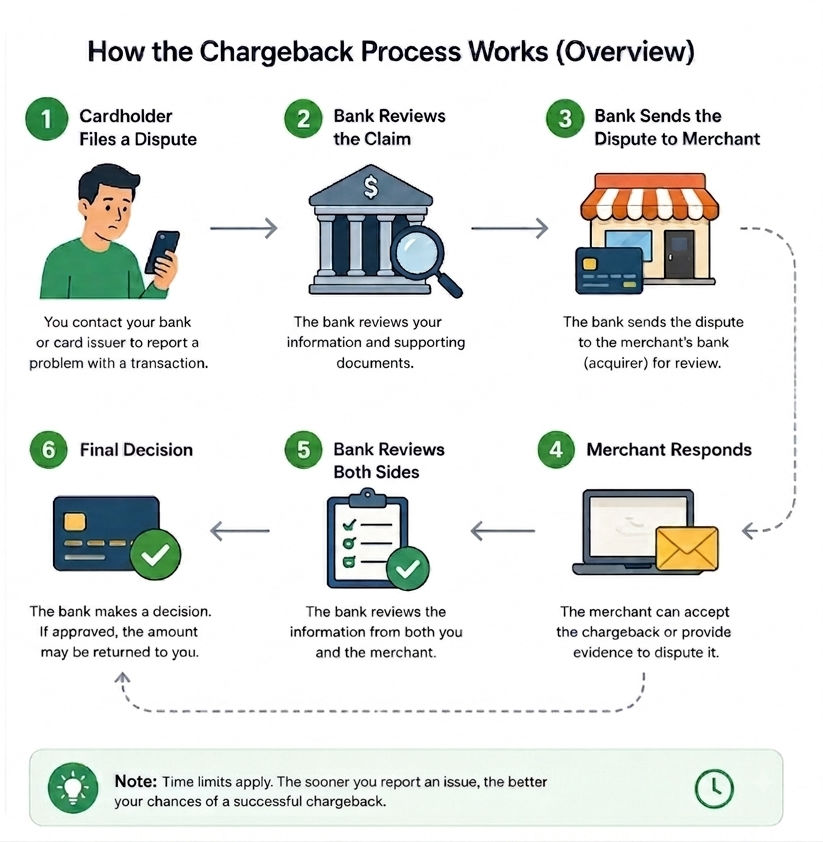
The chargeback process is a way to dispute a card transaction through your bank or card issuer when there is a valid problem with the payment. Instead of getting the money back directly from the merchant, you ask your card issuer to review the transaction and determine whether it qualifies for a chargeback.
A chargeback may be useful when a merchant does not resolve a legitimate payment issue, such as when you paid for an item that was never delivered or were charged for the same purchase more than once.
The process usually involves several steps: reporting the transaction, providing information about the dispute, submitting supporting evidence, and allowing the bank and merchant to review the claim. The exact steps can vary depending on your bank, card network, and reason for the dispute.
How Is a Chargeback Different From a Refund?
A refund comes directly from the merchant. For example, if you cancel an order and the company agrees to return your money, the merchant processes the refund.
A chargeback, on the other hand, is handled through your bank or card issuer. It is generally used when there is a valid dispute that cannot be resolved directly with the merchant.
Understanding this difference can help you choose the right option before starting a dispute.
When Can You Request a Chargeback?
Not every payment problem qualifies for a chargeback. Generally, a chargeback is intended for situations where there is a legitimate issue with a card transaction and the problem cannot be resolved directly with the merchant.
Here are some common situations where you may be able to request a chargeback:
You Didn’t Receive the Product or Service
If you paid for an item or service but never received it, you may have grounds to dispute the transaction. Before filing, keep any order confirmations, delivery information, and messages exchanged with the merchant.
The Product Was Significantly Different From What You Ordered
A chargeback may be possible if the item you received was substantially different from the description or agreement. Photos, product listings, receipts, and communication with the seller can help support your claim.
You Were Charged More Than Once
If the same transaction appears multiple times on your card statement, you may be able to dispute the duplicate charge. Check your receipts and account history first to make sure the transactions were actually duplicates.
The Merchant Promised a Refund but Didn’t Send It
If a merchant agreed to refund your payment but the refund never appeared, keep proof of the agreement. Your bank may ask for this information when reviewing your dispute.
The Transaction Was Unauthorized
If you believe someone used your card without your permission, contact your bank or card issuer as soon as possible. Unauthorized transactions may have a separate fraud-reporting procedure, so follow your bank’s instructions rather than assuming every fraud case follows the same chargeback process.
If you believe someone used your card without your permission, contact your bank or card issuer as soon as possible. If you’re dealing with a transaction you don’t recognize, you can also learn how to dispute a mystery charge on your bank statement before deciding what steps to take next.
The rules and deadlines can vary depending on your bank, card network, and the reason for the dispute. That’s why it’s important to report a problem promptly and provide accurate information about what happened.
How to Start the Chargeback Process
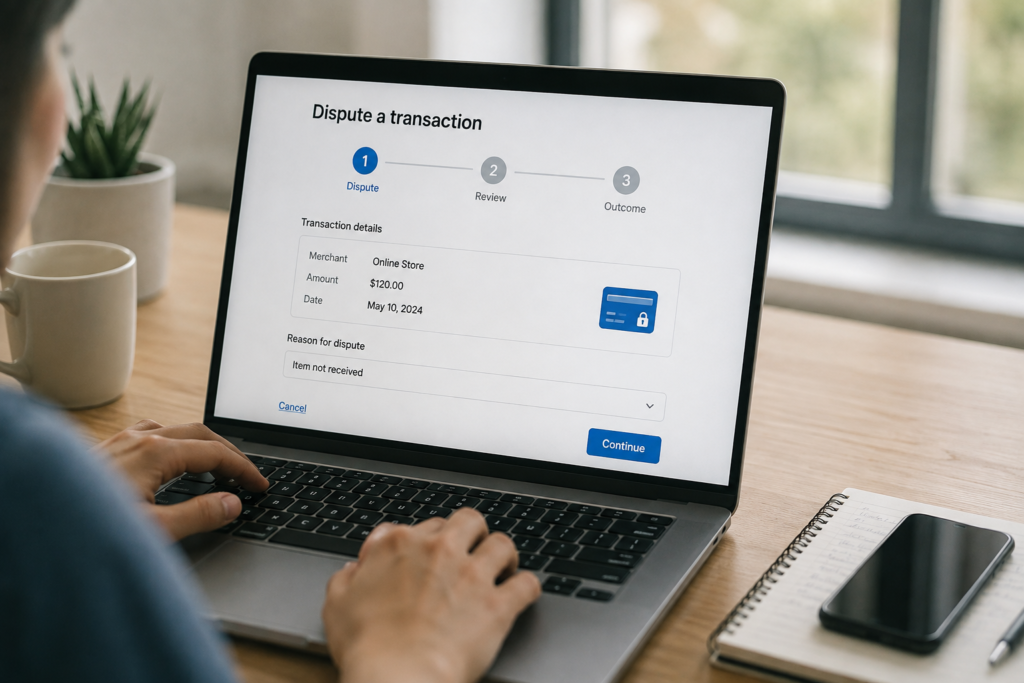
Once you have identified a legitimate problem with a card transaction, the next step is to contact your bank or card issuer. The Consumer Financial Protection Bureau explains how to dispute a credit card charge and what information you may need when reporting a billing problem.
1. Check the Transaction
Before contacting your bank, review your card statement and confirm:
- The merchant name
- Transaction date
- Exact amount
- Whether the transaction was charged once or multiple times
- Whether you already received a refund
This helps you explain exactly which payment you want to dispute.
2. Contact Your Bank or Card Issuer
Use the method your bank provides for card disputes. This might include:
Mobile app → Online banking → Phone support → Bank branch
Tell the representative that you want to dispute a card transaction and explain the reason clearly.
3. Explain What Happened
Give your bank a simple timeline of the problem. For example:
“I purchased the product on July 10, but it was never delivered. I contacted the merchant on July 20 and requested a refund, but the issue was not resolved.”
A clear explanation helps the issuer understand why you believe the transaction should be disputed.
4. Submit Your Evidence
Your bank may ask you to provide documents supporting your claim.
Useful evidence may include:
- Receipt or order confirmation
- Bank or card statement
- Emails with the merchant
- Cancellation requests
- Refund confirmation
- Delivery information
- Screenshots
- Photos of the product, when relevant
💡 Quick Tip
Don’t wait until the last minute to file a dispute. Banks and card networks can have specific deadlines for different types of transactions. If you believe a charge is incorrect, contact your card issuer as soon as possible.
What Happens After You Submit the Dispute?
Submitting the claim is only the beginning. Your bank may review your information, contact the merchant’s bank, and give the merchant an opportunity to respond.
The final decision depends on the circumstances of the transaction and the evidence provided by both sides.
What Happens After You File a Chargeback?
Filing the dispute does not always mean you will immediately receive your money back. Once your claim is submitted, the bank begins reviewing the transaction and may contact the merchant through the payment network.
Here’s a simple look at what usually happens next:
🔎 1. Your Bank Reviews the Claim
The bank checks the information you provided and determines whether the dispute appears to meet the applicable requirements.
They may ask you for additional documents if something is missing or unclear.
🏪 2. The Merchant Gets a Chance to Respond
If the dispute moves forward, the merchant may be notified and given an opportunity to explain the transaction.
The merchant could provide evidence such as:
- Proof that the order was delivered
- Transaction or payment records
- A signed receipt
- Communication with the customer
- Evidence that a refund was already issued
- Details showing that the service was provided
⚖️ 3. Both Sides Are Reviewed
The bank or relevant card network reviews the available information from the cardholder and merchant.
This is why keeping your evidence is important. A clear timeline and relevant documents can help demonstrate what actually happened.
💳 4. A Decision Is Made
Once the review is complete, the dispute can result in the chargeback being accepted or rejected.
| Outcome | What It Means |
|---|---|
| Chargeback approved | The disputed amount may be returned to your account. |
| Chargeback rejected | The original transaction may remain on your account. |
| More information requested | The bank may need additional evidence before completing the review. |
Important: A temporary credit, if your bank provides one, does not necessarily mean the chargeback has been permanently approved. The credit may be reversed if the claim is later rejected.
⏳ How Long Can the Review Take?
There is no single timeframe for every chargeback. The length of the review can depend on your bank, the payment network, the reason for the dispute, and whether the merchant challenges the claim.
If your bank gives you a specific deadline for providing information, make sure you respond within that timeframe.
Chargeback Process for Credit and Debit Cards
The basic chargeback process can be different depending on whether the payment was made with a credit card or a debit card. Your bank may also follow different procedures depending on the type of transaction and the reason for the dispute.
Credit Card Chargeback
With a credit card, you usually contact the card issuer to report the transaction you want to dispute. The issuer may ask for details about the purchase and supporting evidence before reviewing your claim.
For example, if you paid for a product that never arrived, you may need to provide the order confirmation, details of your communication with the merchant, and information showing that the issue was not resolved.
Debit Card Chargeback
Debit card disputes are also handled through your bank or card issuer, but the rules and procedures can differ from credit card transactions.
If you notice an unauthorized debit card transaction, contact your bank as soon as possible. Your bank may have a separate process for reporting fraud or unauthorized payments.
Visa and Mastercard Transactions
Visa and Mastercard have their own rules and dispute frameworks, but cardholders generally start the process by contacting the bank that issued their card.
You normally do not need to contact Visa or Mastercard directly. Your card issuer handles the dispute and communicates through the relevant payment network when necessary.
Tip: Before filing a dispute, check your bank’s specific instructions. The required documents, deadlines, and procedures can vary depending on your card and the type of transaction.
How Long Does the Chargeback Process Take?
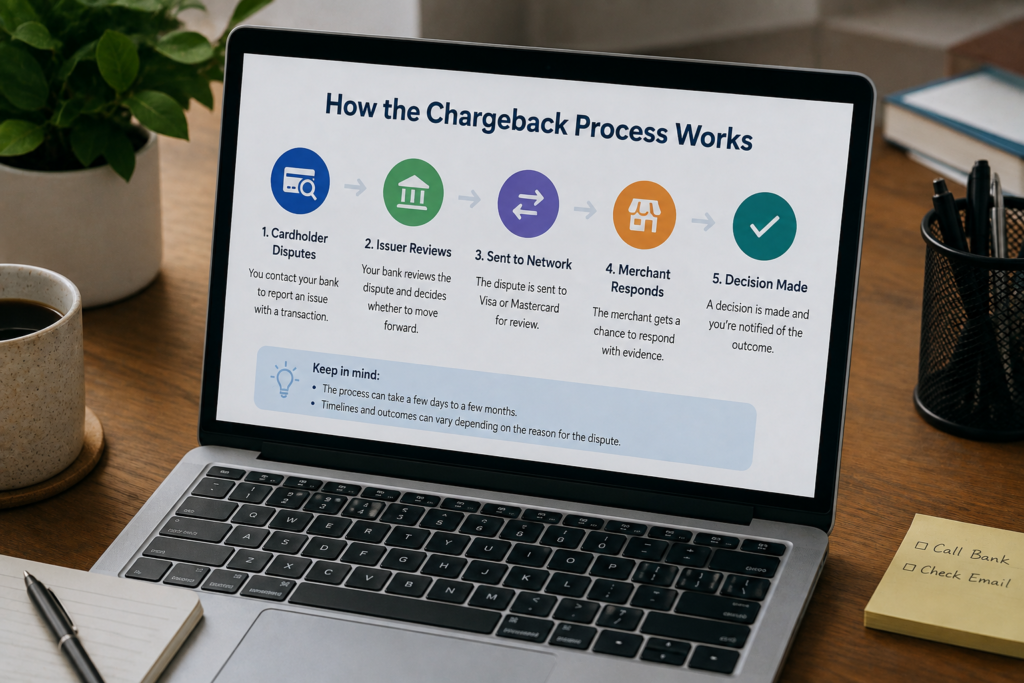
One of the most common questions after filing a dispute is how long it will take to get a final decision. Unfortunately, there is no single timeframe that applies to every chargeback process.
The timeline can depend on your bank, the card network, the reason for the dispute, and whether the merchant challenges your claim.
A Typical Chargeback Timeline
| Stage | What Happens |
|---|---|
| Dispute filed | You report the transaction to your bank or card issuer. |
| Initial review | The issuer reviews your information and supporting documents. |
| Merchant response | The merchant may be given an opportunity to respond. |
| Further review | The bank considers the evidence from both sides. |
| Final decision | The issuer determines whether the dispute is accepted or rejected. |
Some disputes may be handled relatively quickly, while more complicated cases can take several weeks or longer. If the merchant provides additional evidence or challenges the claim, the review may take more time.
Don’t Wait to Report a Problem
Even though the investigation can take time, you should not delay reporting a transaction you believe is incorrect. Banks and card networks can have specific deadlines for different types of disputes.
If your bank asks you to provide documents by a certain date, submit them within that timeframe. Missing a deadline could affect how your claim is handled.
Good to know: A temporary credit from your bank does not necessarily mean your chargeback has been permanently approved. The amount may be reversed if the final decision goes against your claim.
What If Your Chargeback Is Denied?
Not every chargeback claim is approved. If your bank rejects the dispute, it does not necessarily mean you have no options. The next step depends on why the claim was denied and whether your bank allows you to provide additional information.
Check Why the Claim Was Rejected
Start by reviewing the decision or contacting your bank to understand the reason for the rejection.
Common reasons may include:
- The transaction did not meet the dispute requirements
- The evidence provided was not sufficient
- The merchant provided evidence supporting the transaction
- The dispute was submitted after the applicable deadline
- The transaction was already refunded
- The wrong dispute reason was selected
Knowing the reason can help you decide what to do next.
Ask Whether You Can Provide More Evidence
If you have additional documentation that was not included with your original claim, ask your bank whether it can be reviewed.
For example, you might have:
A refund promise → An email from the merchant confirming that a refund would be issued.
Proof of non-delivery → Tracking information showing that an order was never delivered.
Communication records → Messages showing that you tried to resolve the problem with the merchant.
Transaction records → Receipts or statements that clarify what was charged.
Contact the Merchant Again When Appropriate
If the issue is something the merchant can still resolve, contacting them again may be worthwhile. A direct refund can sometimes be simpler than continuing a formal dispute.
However, if the transaction was unauthorized or fraudulent, follow your bank’s instructions rather than relying on the merchant to resolve it.
Important: Don’t submit a false or misleading chargeback simply because your first claim was rejected. A chargeback should only be used when you have a legitimate reason to dispute the transaction.
If your bank provides an appeal or reconsideration process, follow its instructions and submit any additional evidence within the required timeframe.
Tips to Make the Chargeback Process Easier
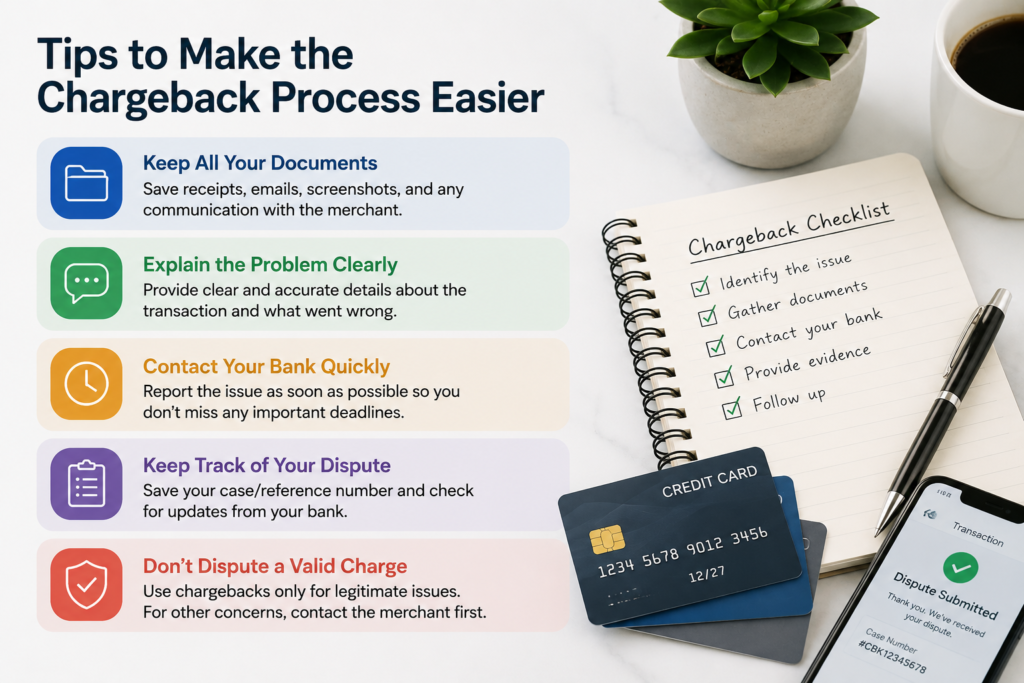
A successful dispute depends on more than simply reporting a transaction. The information you provide and how quickly you respond can make the process easier to manage.
Keep All Your Documents
Save your receipts, order confirmations, emails, screenshots, delivery records, and messages with the merchant. Even if you do not need everything, having the records available can help if your bank asks for additional evidence.
Explain the Problem Clearly
When describing the dispute, stick to the facts. Explain what you purchased, when the transaction happened, what went wrong, and what you did to resolve the issue.
A short and clear timeline is often easier for the bank to understand than a long explanation with unnecessary details.
Contact Your Bank Quickly
Do not wait for weeks before reporting a transaction problem. Different types of disputes can have different deadlines, so contacting your card issuer promptly gives you more time to complete the required steps.
Keep Track of Your Dispute
After submitting your claim, keep the dispute reference number and check your bank account or messages for updates. Your issuer may contact you if it needs more information.
Don’t Dispute a Valid Charge Without a Legitimate Reason
A chargeback should be used for genuine billing or transaction problems. If you simply changed your mind about a purchase, asking the merchant for a refund is usually more appropriate.
Quick reminder: The strongest chargeback claims are usually supported by accurate information, relevant evidence, and a clear explanation of what happened.
Frequently Asked Questions About the Chargeback Process
How do I start the chargeback process?
You usually start by contacting the bank or card issuer that issued your card. Explain the problem with the transaction and provide any documents or evidence your bank requests.
How long does a chargeback take?
There is no fixed timeframe for every dispute. Some claims may be resolved quickly, while others can take several weeks or longer, especially when the merchant challenges the claim.
Can I get a chargeback on a debit card?
You may be able to dispute certain debit card transactions through your bank. The rules and procedures can differ from credit card disputes, so contact your bank as soon as you notice a problem.
What evidence do I need for a chargeback?
Depending on the reason for the dispute, you may need receipts, order confirmations, emails with the merchant, delivery information, refund records, screenshots, or other documents that support your claim.
What happens if the merchant disputes my chargeback?
The merchant may provide evidence showing that the transaction was valid. Your bank or card issuer will review the available information before making a final decision.
Is a chargeback the same as a refund?
No. A refund is normally issued directly by the merchant, while a chargeback is a transaction dispute handled through your bank or card issuer.
Can I request a chargeback if I simply changed my mind?
Usually, changing your mind about a purchase is not by itself a reason to file a chargeback. If there is no billing or transaction problem, contacting the merchant about its return or refund policy is generally the better option.
Conclusion
The chargeback process can help you dispute a card transaction when there is a legitimate problem that cannot be resolved directly with the merchant. Whether you did not receive what you paid for, were charged twice, or experienced an unauthorized transaction, knowing the proper steps can make the process easier to manage.
Start by reviewing the transaction, contacting your bank or card issuer, and gathering any evidence that supports your claim. Keep track of deadlines and respond promptly if your bank asks for additional information.
A chargeback is not guaranteed, but providing accurate details and relevant documentation gives your bank the information it needs to review the dispute properly. If a merchant can resolve the issue through a normal refund, that may be the simpler option.