

Introduction
Finding an unfamiliar transaction on your account can be stressful. If you need to dispute a mystery charge on your bank statement, it is important to act quickly. While some unknown charges turn out to be legitimate purchases or subscription renewals, others may be billing errors or unauthorized transactions. Understanding what to do first can help protect your money and speed up the resolution process.
If you need to dispute a mystery charge on your bank statement, acting quickly can help protect your money and improve your chances of resolving the issue. Reviewing your recent purchases, checking your receipts, and contacting your bank as soon as possible are important first steps.
In this guide, you will learn what a mystery charge is, why it may appear on your bank statement, how to identify the transaction, and the steps you can take to dispute the charge. We will also explain what happens after you file a dispute and share practical tips to help prevent similar problems in the future.
What Is a Mystery Charge on a Bank Statement?
A mystery charge is any transaction on your bank or credit card statement that you cannot immediately identify. The payment may appear under an unfamiliar merchant name, show an unexpected amount, or relate to a purchase you do not remember making.
In many cases, a mystery charge is not the result of fraud. Businesses sometimes process payments using their legal company name instead of their brand name, making the transaction difficult to recognize. Delayed payments, automatic subscription renewals, or purchases made by an authorized family member can also create confusion.
However, some mystery charges are unauthorized transactions. If someone gains access to your debit card, credit card, or banking information, they may use it to make purchases without your knowledge. That is why it is important to investigate every unfamiliar charge instead of ignoring it.
Why Mystery Charges Appear
A mystery charge can appear for several reasons, including:
- A merchant uses a billing name that is different from its store or website name.
- A subscription renews automatically after a free trial or billing cycle.
- A pending transaction is posted days after the original purchase.
- A hotel, restaurant, or rental company places a temporary authorization hold on your card.
- A family member or authorized cardholder makes a purchase without informing you.
- Someone uses your card details without your permission.
Some mystery charges are caused by automatic bill payments or recurring subscriptions that continue without notice. If you want to prevent future recurring charges, read our guide on How to Stop Automatic Bill Payments via Ban
How to Tell Whether the Charge Is Legitimate
Before contacting your bank, ask yourself a few questions:
- Have I made a purchase from this merchant recently?
- Does the amount match any recent transaction?
- Could this be an automatic renewal or recurring payment?
- Did a family member or authorized user make the purchase?
- Have I received any emails or receipts related to this transaction?
Answering these questions may help you identify the payment without filing an unnecessary dispute.
Key Takeaway: Never ignore a mystery charge, even if the amount seems small. Review the transaction carefully, and if you still cannot identify it, contact your bank promptly to dispute a mystery charge on your bank statement and protect your account.
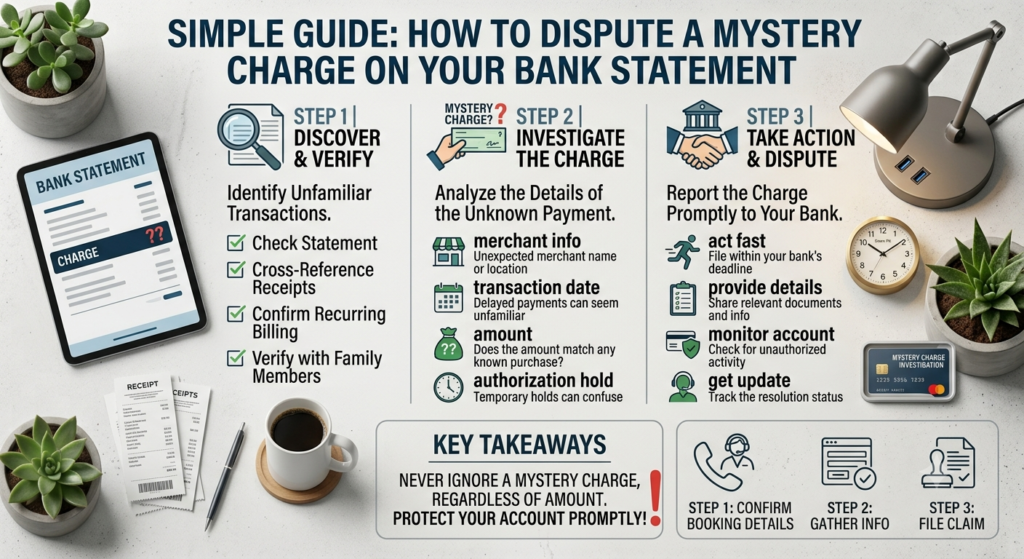
How to Identify a Mystery Charge Before Filing a Dispute
Before you contact your bank, spend a few minutes investigating the transaction. Many mystery charges have simple explanations, and identifying the payment yourself can save time and prevent an unnecessary dispute.
Start With This Quick Checklist
Before filing a dispute, check whether you can answer “Yes” to any of these questions:
| Question | Why It Matters |
|---|---|
| Did you make a purchase in the last few days? | Some merchants process payments later than expected. |
| Does the merchant use a different billing name? | The name on your statement may not match the store you visited. |
| Do you have an active subscription? | Automatic renewals often appear as unexpected charges. |
| Did a family member use your card? | Authorized users may make purchases without telling you immediately. |
| Is the charge still pending? | Pending transactions sometimes change or disappear after processing. |
Compare the Charge With Your Records
Open your email inbox and search for receipts, booking confirmations, or order history. If you shop online, log in to your accounts and compare the transaction amount with your recent purchases.
Also review your mobile banking app. Some banks provide extra details, such as the merchant’s location, category, or contact information, making it easier to recognize the transaction.
Contact the Merchant First
If you believe you know which business processed the payment, contact the merchant before filing a dispute. A billing error, duplicate charge, or delayed refund may be resolved much faster by the company than through a formal bank investigation.
File a Dispute Only When Necessary
If you still cannot identify the transaction after reviewing your records and contacting the merchant, it is time to contact your bank. Explain why the charge appears unfamiliar and ask how to dispute a mystery charge on your bank statement.
Tip: Take screenshots of the transaction and save any emails or receipts before starting the dispute process. Keeping organized records can make it easier to support your claim if the bank requests additional information.
Steps to Dispute a Mystery Charge on Your Bank Statement
Once you have confirmed that you do not recognize the transaction, begin the dispute process as soon as possible. Most banks have specific time limits for reporting unauthorized or incorrect charges, so delaying your request could affect the outcome.
1. Review the Transaction Details
Start by checking the date, amount, merchant name, and payment method. Compare this information with your recent purchases, receipts, emails, and order history. Even if the merchant name looks unfamiliar, it may still relate to a legitimate purchase.
2. Contact the Merchant
If you believe the charge may be linked to a legitimate business, contact the merchant before filing a dispute. Explain why the transaction looks unfamiliar and ask for additional details. Many issues, such as duplicate charges or billing errors, can be resolved without involving your bank.
3. Notify Your Bank Immediately
If you still cannot identify the transaction or believe someone used your account without permission, contact your bank through its official customer service number, mobile app, or online banking portal.
Be prepared to explain:
- Why you believe the charge is incorrect or unauthorized
- When you first noticed the transaction
- Whether you have already contacted the merchant
- Any information that supports your claim
| Helpful Resource: To learn more about your rights when reporting unauthorized or incorrect bank charges, visit the official Consumer Financial Protection Bureau (CFPB) website. |
4. Submit the Required Documents
Your bank may ask for supporting documents before opening or completing the investigation. These may include:
- A copy of your bank statement
- Transaction screenshots
- Receipts or order confirmations
- Emails exchanged with the merchant
- Any other evidence related to the charge
Providing complete and accurate information can help the bank review your case more efficiently.
5. Monitor Your Dispute
After your bank accepts your dispute, keep track of its progress. Save your case number, respond promptly if the bank requests additional information, and regularly check your account for updates or provisional credits.
Remember: The sooner you report an unfamiliar transaction, the sooner your bank can begin investigating it. Acting quickly may also help prevent additional unauthorized charges from appearing on your account.
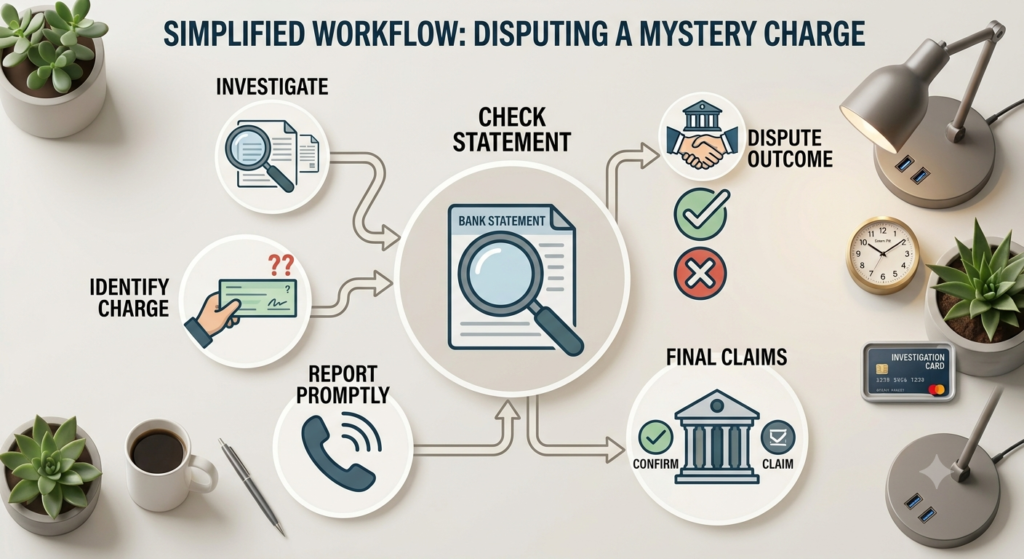
What Happens After You File a Dispute?
Filing a dispute does not mean you will receive an immediate refund. After your bank receives your request, it begins reviewing the transaction and gathering the information needed to determine whether the charge is valid.
The Bank Reviews Your Claim
The bank will examine the details you provided, such as the transaction amount, merchant information, and any supporting documents. It may also contact the merchant for additional information before making a decision.
You May Be Asked for More Information
During the investigation, the bank may ask you to provide:
- Additional receipts or invoices
- Screenshots of the transaction
- Emails exchanged with the merchant
- A written explanation of why you believe the charge is incorrect
- Identity verification documents
Respond as soon as possible to avoid unnecessary delays.
Temporary Credit May Be Available
Some banks may place a temporary credit in your account while they investigate the dispute. This practice varies between financial institutions, so do not assume you will automatically receive provisional funds.
How Long Does the Investigation Take?
The time required to complete a dispute depends on the bank, the payment method, and the complexity of the case. Simple billing errors may be resolved quickly, while disputes involving unauthorized transactions can take longer.
Possible Outcomes
After completing the investigation, the bank may:
| Decision | What It Means |
|---|---|
| Dispute Approved | The bank refunds the eligible amount to your account. |
| Additional Information Required | The bank needs more evidence before making a final decision. |
| Dispute Rejected | The bank determines that the charge is valid or there is not enough evidence to support the claim. |
Tip: Continue checking your bank account, email, and mobile banking app while the investigation is in progress. Missing a request for additional information could delay the final decision.
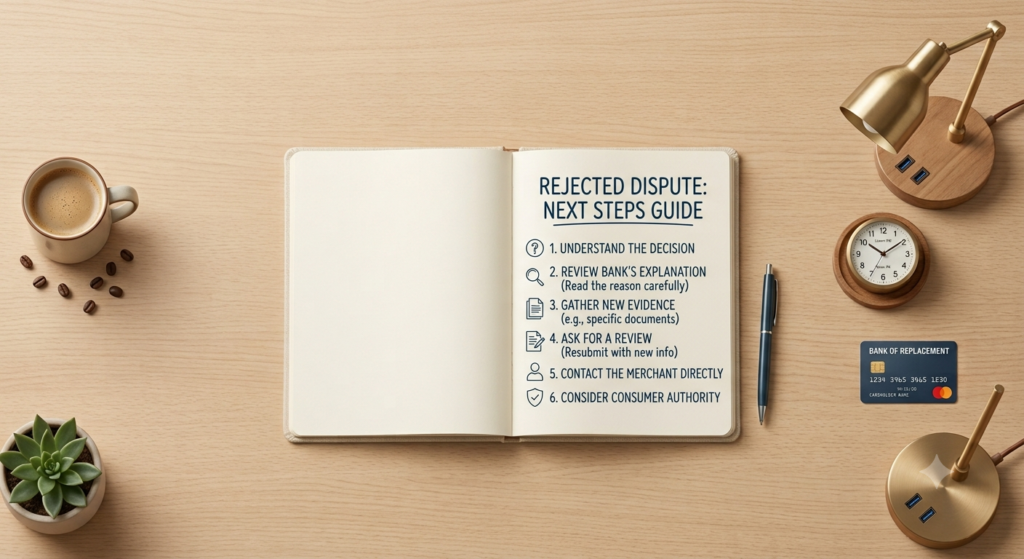
What If Your Bank Rejects Your Dispute?
A rejected dispute can be disappointing, but it does not always mean you have reached the end of the process. The first step is to understand why your bank declined your request and whether you can provide additional information to support your claim.
Review the Reason for the Decision
Read the bank’s explanation carefully. A dispute may be rejected because:
- The transaction was authorized.
- There was not enough evidence to support your claim.
- The dispute was filed after the reporting deadline.
- The merchant proved that the transaction was valid.
- Required documents were missing or incomplete.
Knowing the exact reason will help you decide what to do next.
Gather Additional Evidence
If you believe the decision was incorrect, collect any new information that supports your case. Useful evidence may include:
- New receipts or invoices
- Emails or chat conversations with the merchant
- Screenshots of your online account
- Proof that you attempted to resolve the issue directly with the merchant
- Any documents that show the transaction was unauthorized or incorrect
Ask the Bank to Review the Case Again
Contact your bank and explain why you disagree with the decision. If you have additional evidence, ask whether the dispute can be reviewed again. Some banks allow customers to submit new information before closing the case permanently.
Contact the Merchant
If you have not already done so, reach out to the merchant directly. Some businesses are willing to issue a refund or correct a billing mistake even after the bank has rejected the dispute.
Consider Other Available Options
If the issue remains unresolved, ask your bank about any additional complaint or appeal process that may be available. You can also review guidance from the appropriate consumer protection authority if you believe your rights have not been respected.
Remember: A rejected dispute is not always the final outcome. Keeping detailed records, responding quickly, and providing clear evidence can improve your chances if your bank agrees to review the case again.
Tips to Prevent Mystery Charges in the Future
While you cannot prevent every unexpected transaction, a few good banking habits can greatly reduce the risk of mystery charges and help you spot problems early.
Monitor Your Bank Statements Regularly
Review your bank and credit card statements at least once a month. Checking your transactions regularly makes it easier to identify unfamiliar charges before they become a bigger issue.
Turn On Transaction Alerts
Most banks allow you to receive notifications for purchases, ATM withdrawals, and online payments. These alerts help you notice suspicious activity as soon as it happens.
Keep Track of Your Subscriptions
Many mystery charges come from recurring subscriptions that people forget about. Make a list of your active subscriptions and review them from time to time to ensure you still want each service.
Protect Your Banking Information
Never share your debit card, credit card, PIN, passwords, or one-time verification codes with anyone. When shopping online, use trusted websites and avoid making payments over unsecured public Wi-Fi networks.
Report Lost or Stolen Cards Immediately
If your debit or credit card is lost or stolen, contact your bank without delay. Reporting the issue quickly can help prevent unauthorized transactions and reduce the risk of financial loss.
Save Important Payment Records
Keep receipts, confirmation emails, invoices, and booking records for your important purchases. These documents can be valuable if you ever need to verify a transaction or support a future dispute.
Final Tip: Staying aware of your account activity is one of the best ways to protect your money. The earlier you identify an unfamiliar charge, the easier it is to investigate and resolve the issue.
Frequently Asked Questions
Can I dispute a mystery charge on my bank statement if I am not sure it is fraudulent?
Yes. If you cannot identify a transaction after reviewing your receipts, subscriptions, and recent purchases, contact your bank. They can help you verify the charge and explain the dispute process.
How long do I have to dispute a mystery charge?
The time limit depends on your bank and the type of transaction. Report unfamiliar charges as soon as you notice them to avoid missing any reporting deadlines.
Will my bank refund the money immediately?
Not always. Some banks may provide a temporary credit while they investigate the dispute, while others wait until the investigation is complete before making a decision.
What documents should I keep when filing a dispute?
Keep your bank statement, transaction screenshots, receipts, emails, cancellation confirmations, and any communication with the merchant or your bank. These records can help support your claim.
Should I contact the merchant before contacting my bank?
If the charge appears to be a billing error or a purchase from a legitimate business, contacting the merchant first may resolve the issue more quickly. If you believe the transaction is unauthorized, notify your bank immediately.
Can I dispute a charge that was made by a family member?
If the family member was authorized to use your card or account, the bank may not treat the transaction as unauthorized. Contact your bank to discuss your specific situation and the options available.
Conclusion
Finding an unfamiliar transaction on your account can be worrying, but acting quickly can make a significant difference. Before filing a dispute, review your recent purchases, check your subscriptions, and contact the merchant if the transaction may be legitimate.
If you still cannot identify the payment, contact your bank promptly to dispute a mystery charge on your bank statement. Keep copies of your documents, respond to any requests for additional information, and monitor your account until the investigation is complete.
Understanding the dispute process and staying alert to unusual account activity can help protect your finances and reduce the risk of future unauthorized or incorrect charges.