Managing financial tools is an important part of running a business today. Many companies use modern software to automate payments, invoices, and financial workflows. One of the most popular platforms used by businesses is BILL, which provides automation for accounts payable and receivable.
This guide explains how to cancel bill account, the bill.com account cancellation process, and what happens after you close your account. It also explains how to reactivate bill.com account, how to solve a bill.com login problem after cancellation, and how to manage privacy settings.
The article uses simple language to help business owners, freelancers, and accounting professionals understand how the system works.
Understanding the BILL Platform and How It Works
Before learning how to cancel bill account, it is important to understand what the platform does. BILL is widely known as a secure payment platform that helps businesses automate financial tasks such as payments, invoicing, approvals, and vendor management.
Many organizations rely on this system because it integrates with cloud accounting software like accounting platforms used by accountants and finance teams. The software acts as a financial operations platform that allows companies to manage their entire financial workflow from one dashboard.
Businesses also use it for accounts payable automation, which allows companies to automatically approve and pay vendor bills without manual paperwork. At the same time, it works as accounts receivable software, helping businesses receive payments from customers faster.
The platform supports modern online payment processing tools and simplifies invoice payment management for growing companies. Small and medium-sized businesses often use BILL for small business finance automation, which reduces the time they spend on manual financial tasks.
However, there are situations where companies may want to close or deactivate their account. This is where understanding how to close bill.com business account becomes important.
How to Cancel BILL Account and Start the Cancellation Process
Many users search online for how to cancel bill account when they no longer need the platform. The bill.com account cancellation process is usually straightforward, but it requires some preparation to avoid losing financial data.
Businesses usually cancel accounts because they are switching accounting software, closing a business, or moving to a different secure payment platform.
When starting the cancel bill.com account process, it is important to review your current subscriptions, payments, and vendor records. Many companies forget to check their bill.com subscription management settings before closing their accounts.
In most cases, the steps to deactivate bill account begin by logging into the platform and navigating to bill.com dashboard settings. Inside the dashboard, administrators can find options related to billing, subscription settings, and account status.
Companies should also review bill.com user permissions and inform all team members before closing the account. If multiple employees or accountants have access, removing their permissions helps avoid confusion later.
Another important step during the how to delete bill.com company account process is reviewing connected bank accounts or cards. Businesses often need to remove payment account from the system before the account can be fully closed.
The following table shows the general stages of the bill.com account cancellation process.
| Step | Description |
| Account Review | Review invoices, payments, and vendor records |
| Subscription Check | Check bill.com subscription management settings |
| Remove Bank Accounts | Remove payment account from the platform |
| Adjust Permissions | Review bill.com user permissions |
| Cancel Account | Complete the cancel bill.com account request |
Following these steps ensures a smooth and safe cancellation.
What Happens After You Close a BILL.com Business Account
Once you complete how to close bill.com business account, the system usually restricts access to financial data and payment services. The platform stops processing payments, invoices, and vendor approvals.
Businesses that used the system for accounts payable automation and invoice payment management will need to move their financial records to another system or download the data for backup.
Some users may face a bill.com login problem after cancellation because the platform disables login access once the account is fully closed. This can cause confusion for business owners who want to retrieve older financial records.
Experts often recommend exporting reports before completing the steps to deactivate bill account. Financial data such as invoices, vendor information, and transaction records may be needed for tax filing or audits.
The system uses bill.com data privacy settings to protect business information and keep sensitive financial records secure even after cancellation.
For more on resolving billing issues, see our guide on how the chargeback process works.
How to Permanently Delete Your BILL.com Account
Cancelling and deleting are not the same thing on the BILL platform, and understanding the difference matters if you want your information fully removed rather than just deactivated. Cancelling stops billing and closes active use of the account, but some account data may still remain stored in BILL’s system afterward. If you want to permanently delete your Bill.com account instead of simply pausing or canceling it, you need to complete a few additional steps.
Sub-heading: Export Your Financial Records First
Before requesting deletion, take time to download any invoices, payment history, vendor records, or transaction reports you might need later.Once you fully delete an account, retrieving this information becomes very difficult or entirely impossible. Go into your reports section within the BILL dashboard and export anything connected to taxes, audits, or historical payment records.
Sub-heading: Cancel Any Active Subscription
If you still have a paid plan attached to your account, cancel that subscription first through your account or billing settings. BILL generally processes deletion requests only after you stop all billing.
Sub-heading: Remove Connected Bank Accounts and Cards
Before BILL can delete your account, remove any linked bank accounts, debit cards, or other payment methods from the platform.Leaving payment methods connected can sometimes slow down the deletion request.
Sub-heading: Contact BILL Support to Request Full Deletion
Permanently deleting your Bill.com account typically requires reaching out to BILL’s support team directly. Explain that you want your account and all associated data fully deleted, not simply deactivated. Support will usually verify your identity before processing the request.
Sub-heading: Get Written Confirmation
Once support confirms the deletion has been processed, ask for that confirmation in writing. Keep this documentation for your own records.
Sub-heading: What Happens to Your Data After Deletion
Once deletion is complete, your login access ends immediately. BILL generally removes historical records tied to the account from its active systems, which is why exporting anything you need beforehand matters.
How to Reactivate BILL.com Account and Restore Access
Sometimes companies cancel accounts by mistake or decide to return to the platform later. In such situations, it becomes important to understand how to reactivate bill.com account.
The process to restore bill account access usually involves contacting the support team and verifying company information. The support team checks account status and confirms whether reactivation is possible.
If the account was recently closed, the company may be able to recover it easily. However, older accounts may require a new setup depending on the company’s bill.com subscription management plan.
Some users attempt to log in again and encounter a bill.com login problem after cancellation, which happens because the system blocks inactive accounts. In such cases, contacting customer support is the best solution.
BILL.com Privacy Settings and Cookie Preferences
Modern financial platforms must protect user data and follow global privacy laws. This is why BILL provides several privacy options including bill.com privacy settings and bill.com cookie preferences.
These tools allow users to control how their data is used while using the website or dashboard. Businesses using the platform can adjust bill.com data privacy settings to manage tracking, analytics, and user behavior data.
The platform also includes cookie consent management, which allows users to choose which cookies they allow on the website.
The following table explains the common cookie types used on many platforms.
| Cookie Type | Purpose |
| Essential Cookies | Required for login and security |
| Functional Cookies | Store user preferences |
| Performance Cookies | Track website performance |
| Marketing Cookies | Used for advertising |
Adjusting bill.com cookie preferences helps businesses control how their data is collected.
How to Contact BILL.com Support for Account Help
Sometimes the cancellation process requires assistance from the support team. Businesses often search for how to contact bill.com support when they face technical problems or account issues.
The platform provides several support options through the bill.com help centre, which includes tutorials, troubleshooting guides, and account management help.
Users can also reach customer support using the bill.com customer support number or submit requests through the website support system.
Customer service can help businesses with issues like restoring accounts, solving login problems, and guiding users through the bill.com account cancellation process.
Here is a simple overview of support options.
| Support Method | Purpose |
| bill.com help centre | Guides and tutorials |
| Email Support | Account and technical questions |
| bill.com customer support number | Direct phone assistance |
| Live Chat | Quick troubleshooting |
Common Reasons Businesses Cancel Their BILL Account
Content:
Businesses cancel their BILL account for a variety of practical reasons, and understanding these can help you decide if cancelling makes sense for your situation too.
Switching to a Different Accounting Platform
Some companies move to accounting software that better fits their growing needs, especially if they want deeper reporting or analytics that BILL doesn’t offer.
Closing or Restructuring the Business
When a business shuts down, merges, or restructures, its financial tools often need to be closed out as part of that transition, including any active BILL account.
Reducing Software Costs
As companies review their monthly software expenses, tools that overlap with other platforms already in use are often the first to go, especially if usage has dropped over time.
Moving to In-House Financial Management
Some smaller businesses eventually bring invoicing and payments back in-house once they have the staff or systems to manage it directly, no longer needing an automated third-party platform.
Whatever the reason, the same core steps apply: export your records, cancel any active subscription, and confirm the cancellation before considering the process complete.
FAQs:
What is the easiest way to cancel a BILL account?
The easiest way to complete how to cancel bill account is by logging into your dashboard on the BILL platform and navigating to the account settings area. From there, you can open the billing or subscription section and start the bill.com account cancellation process. Before completing the cancellation, it is recommended to review your invoices, payments, and connected bank accounts. Businesses should also check their bill.com subscription management settings and export important financial records because once the account is closed, access to financial data may become limited.
What are the steps to deactivate a BILL account?
The steps to deactivate bill account usually involve several preparation tasks to protect business data. First, users should review payment history and download transaction records from the platform. Next, businesses should remove payment account from the system and confirm that there are no pending payments or invoices. After that, administrators can visit bill.com dashboard settings and request account cancellation. Companies should also review bill.com user permissions to ensure that all team members are informed before completing the cancel bill.com account process.
How can I close my BILL.com business account permanently?
To understand how to close bill.com business account, users must first log into their account and access the billing or account settings section. From there, they can submit a cancellation request or contact support if the option is not available. Some companies also choose to contact the support team directly through the bill.com help centre to complete the process. The support team may verify company information before completing the how to delete bill.com company account request.
Can I permanently delete my Bill.com account?
Yes, though it requires a few extra steps beyond standard cancellation. Cancelling stops billing, but doesn’t necessarily remove all your data from BILL’s system. To permanently delete your account, first export any invoices or records you need, cancel your active subscription, and then contact BILL’s support team directly to specifically request full account deletion. Ask for written confirmation once the deletion has been completed.
Can I reactivate my BILL.com account after cancellation?
Yes, it is often possible to learn how to reactivate bill.com account if the account was recently closed. Businesses can request support to restore bill account access by contacting customer service through the platform. However, reactivation depends on how long the account has been inactive. If the account has been closed for a long time, the company may need to create a new account instead of restoring the previous one.
Why am I facing a login problem after cancelling my BILL account?
Many users experience a bill.com login problem after cancellation because the system automatically disables access to closed accounts. Once the bill.com account cancellation process is complete, the platform restricts login access to protect financial data. If you need access to previous data or want to restore the account, you should contact the support team through the bill.com help centre or use the bill.com customer support number.
How can I contact BILL.com customer support?
Businesses that need help with cancellation, account access, or billing can learn how to contact bill.com support through several channels. The platform provides support through the bill.com help centre, email support, and the bill.com customer support number. Support representatives can guide users through technical issues, assist with the cancel bill.com account process, or help businesses restore bill account access if necessary.
How do BILL privacy and cookie settings work?
The platform provides tools such as bill.com privacy settings and bill.com cookie preferences to help users control their data. These features allow businesses to adjust tracking options, manage advertising cookies, and control analytics tools. The system also includes bill.com data privacy settings and cookie consent management, which ensure that companies using this secure payment platform maintain control over their information while using the service.
What services does BILL.com provide for businesses?
BILL is widely used as a financial operations platform that simplifies payment and accounting tasks. It provides accounts payable automation, accounts receivable software, and tools for invoice payment management. Many businesses use it alongside cloud accounting software to improve financial workflows. The platform also works as part of modern online payment processing tools that support small business finance automation.
Final Thoughts on Canceling or Reactivating a BILL Account
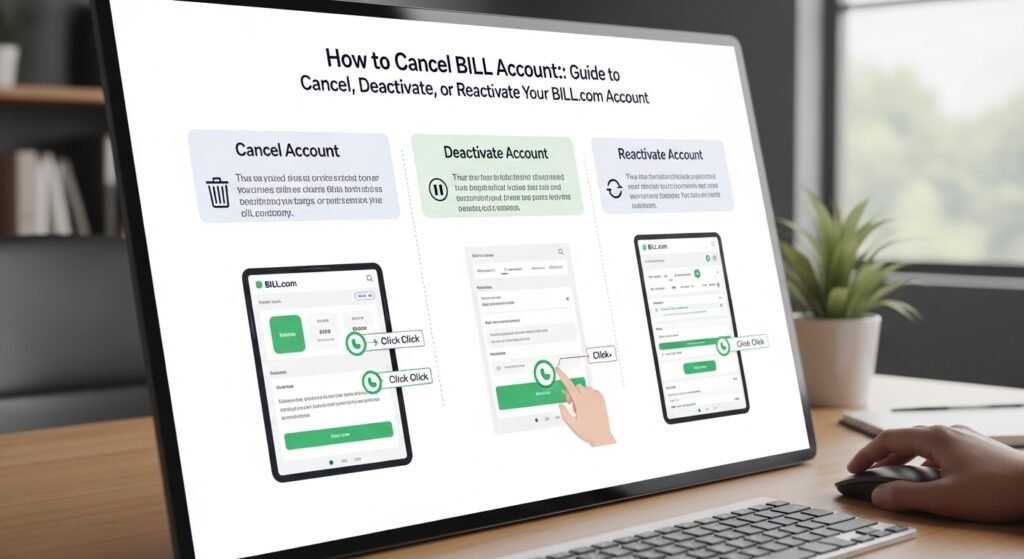
Understanding how to cancel bill account is important for businesses that use modern financial platforms. The bill.com account cancellation process involves reviewing financial data, removing connected payment accounts, and updating subscription settings.
Companies should also understand how to reactivate bill.com account in case they need to restore bill account access later.
Because platforms like BILL play a major role in small business finance automation, it is important to handle cancellation carefully and keep backups of financial records.
By understanding bill.com privacy settings, adjusting bill.com cookie preferences, and contacting the bill.com help centre when needed, businesses can safely manage their financial accounts and data.
conclusion :
How to Cancel BILL Account: helps you control your money and avoid extra charges. You can check your account, review active services, and stop any subscription you do not need. Clear steps make the process simple and safe. You stay aware of every bill and payment. This habit protects your budget and keeps your finances organized.
When you understand How to Cancel BILL Account: you gain confidence in managing online services. You read the terms, follow the cancel steps, and confirm the final action. You also save records of the cancellation for safety. These simple actions stop unwanted charges and protect your money. Good account management helps you stay responsible and careful with every payment.